
‘Tis the season of putting your spring and summer training to the test on your outdoor projects, enjoying the crisp weather and stunning change of seasons, and taking trips with your best climbing friends to your favorite crags. With the change of seasons comes fluctuating temperatures and overall chillier days. Knowing what layers of clothing to pack for a fall or winter outdoor climbing trip can be tricky. Whether you need to pack light to save space for climbing gear and stay within luggage weight limits, or pack minimally to make room for crashpads in your trunk, you only want to bring the essentials. After trials, tribulations, and many outdoor climbing trips to test out what is best, here’s a comprehensive guide on what to pack for fall and winter outdoor climbing trips.
Must Have Layers for a Fall Outdoor Climbing Trip
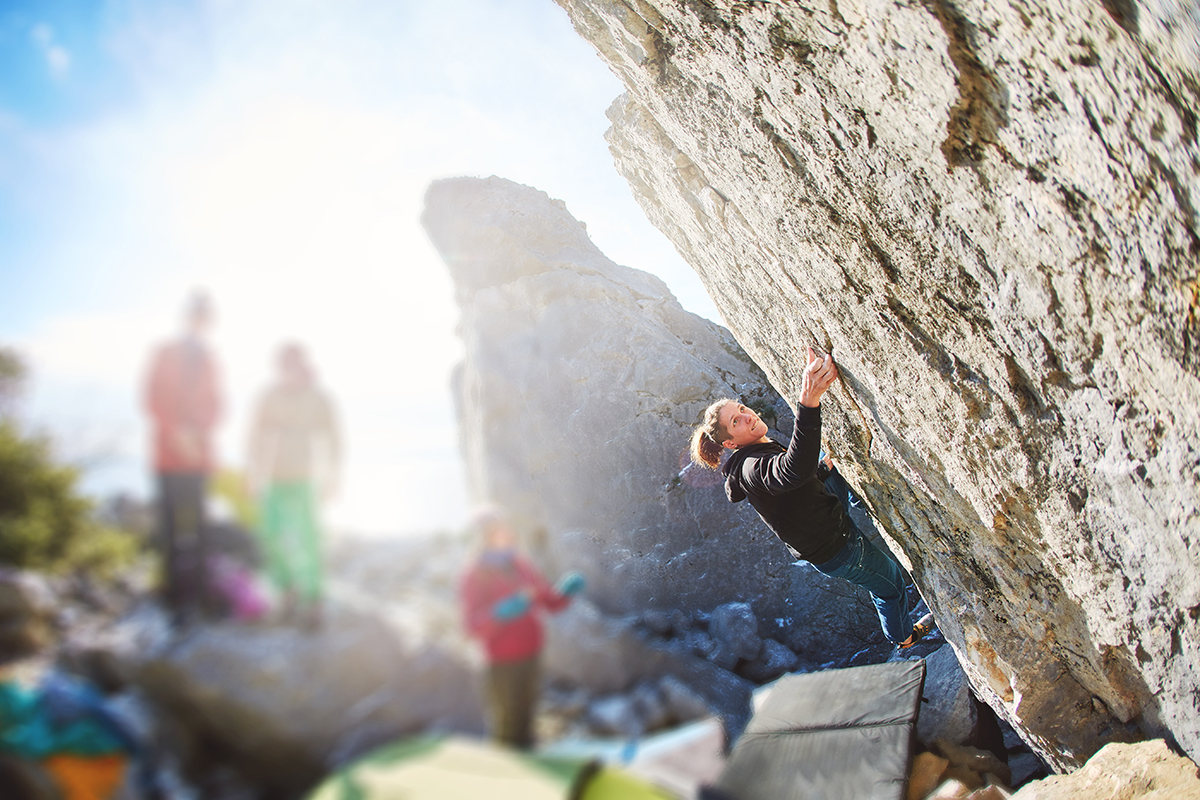
Lightweight Long-Sleeve
Fall is a time of volatility. It can be cold in the morning and hot in the afternoon. Or, it can be mild all day. A lightweight long-sleeve shirt is perfect for transitional temperatures because it keeps you cool without causing you to sweat or overheat.
A key feature to look for in a lightweight long-sleeve shirt is moisture-wicking material, as those fall temps may still be warm enough to cause you to break a sweat. Built-in sun protection (SPF rating) is also a plus, as the sun can still cause damage, no matter the temperatures. Great brands to check out include Patagonia and Mountain Hardware. It’s also worth seeing what’s in stock at your local climbing gym’s ProShop or Retail shop.
Lightweight Long Pants
Depending on the time of day you’re climbing and whether your trip is in early or late fall, you might or might not be able to get away with wearing shorts. Instead, a pair of lightweight pants might suit your needs best, as they protect your knees and shins from the random scratches and bruises that outdoor climbing trips always seem to promise.
Some good features to look for are an optional drawstring cinch at the waist and bottom of the pant legs. Good pockets that aren’t too bulky are a plus for carrying a chalk brush or hiding some hand warmers.
Lightweight Puffy or Windbreaker
With chilly mornings and evenings or if you’re climbing boulders in the shade, you’ll need a layer to keep out the chill in between attempts. A classic hoodie or crewneck will get the job done, but you may need a lighter layer that zips up for increased ventilation. A lightweight puffy or windbreaker is a great option that also layers nicely over a long sleeve or sweatshirt. Patagonia, Mammut, and The North Face make a variety of popular puffy jackets and windbreakers suited for fall temperatures.
Midweight Cotton T-shirt
T-shirts come in all shapes, sizes, and materials. One consideration is the weight of a t-shirt. The best t-shirt for fall temps, that works well with other layers, is a mid-weight cotton t-shirt. Mid-weight t-shirts provide the comfort and flexibility of a lightweight t-shirt with the durability of a heavyweight t-shirt. Opting for cotton ensures breathability in milder, warmer temps. The only time you’ll want to avoid cotton is in cold and wet conditions, as it traps moisture, which can give you the chills or cause chafing.
Must Have Layers for a Winter Outdoor Climbing Trip
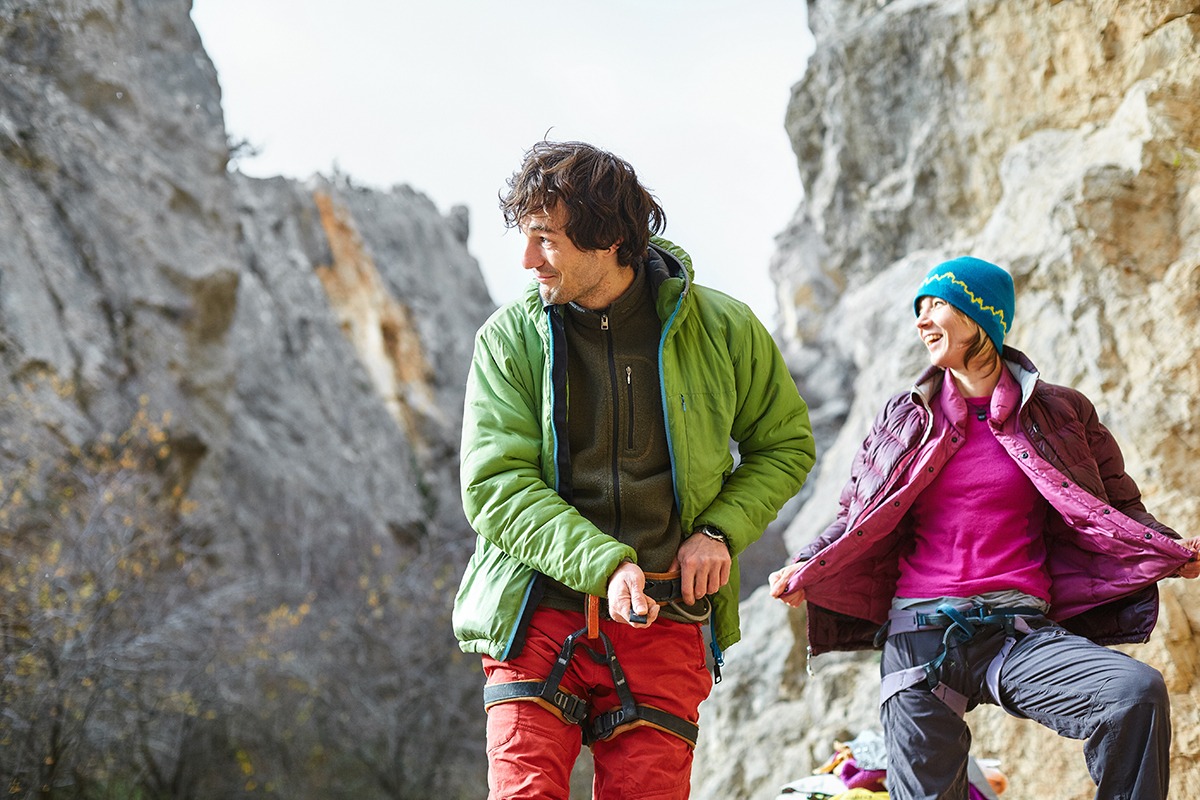
Puffy
A Puffy, aka a puffer or quilted jacket, is a climber’s pride and joy. Puffy’s come in different shapes, sizes, and levels of warmth. While a lightweight puffy will work for fall temperatures, you’ll likely want a warmer, thicker option for winter. Almost all major outdoor clothing brands will make their version of a winter puffy. A good quality puffy can be on the expensive side, so it’s worth hunting for one on sale in the off-season or checking a second-hand outdoor gear shop.
Merino Wool Shirt or Sweater
Merino wool is going to be your best friend for winter outdoor climbing trips. The temperature-regulating, moisture-wicking material ensures comfort and warmth even in damp conditions. Find a patch of sun, and it starts to warm up at the crag; the Merino wool won’t feel suffocating. Unlike traditional wool, Merino wool isn’t itchy and provides UV protection.
Fleece-Lined Pants or Fleece Leggings
Upgrading to fleece-lined pants or leggings ensures all-day warmth. The added fleece can also increase the durability of the clothes. If it’s going to be really cold on your trip, consider wearing fleece-lined leggings under climbing pants.
Merino Wool Socks
You’ll be slipping your feet in and out of climbing shoes on your outdoor climbing days. When you’re not in your climbing shoes, you’ll want to keep your feet warm and dry. Merino wool socks provide both warmth and comfort and are worth the investment. Get a long pair of socks that come up your leg to provide extra warmth.
Mittens or Gloves
Just like your toes, you’ll want to keep your fingers warm in between climbs. While hand warmers are a great idea, slip them inside a pair of gloves or mittens to double up on warmth. If you’ll be belaying a climbing partner, gloves are a more practical option. However, mittens will be more effective at keeping your fingers warm.
Beanie
The temperature of your head can help regulate the temperature of your body. If you’re too hot, dump cold water on your head or wear a cap filled with ice. If you’re too cold, wear a warm beanie. There are so many fun beanie colors and designs out there that you’re guaranteed to find one you love! For the girlies, or guys rocking long hair, there are beanies with holes to accommodate ponytails or buns.
Fall and winter outdoor climbing trips bring the excitement of beautiful scenery and great sending temperatures. Ensuring that you are comfortable will make the journey more enjoyable. Use this guide to pack the right clothes so that fluctuating fall temperatures don’t catch you off guard and cold winter weather doesn’t freeze your fingers and toes.